
Framework overview and practical lead-in
This framework presents a stepwise method for manufacturers to interpret third-party laboratory certificates with clinical precision. Begin by aligning the report to your product specification set and to any field application — for example, Antarctic research stations require verified low thermal conductivity and controlled moisture uptake, which is why many teams consult thermal insulation solutions as a reference for validated material systems. The goal is traceable verification: confirm identity, confirm test conditions, confirm statistical validity, then map findings to production control.
Step 1 — Confirm laboratory accreditation and scope
Open the certificate and locate the laboratory accreditation block. A usable certificate must state the accrediting body and the exact accredited scope. Look for explicit language such as “Scope: steady-state thermal conductivity measurement; sample thickness range 5–50 mm; humidity-controlled conditioning.” If the scope omits measurement ranges or excludes the test method section, consider that a gap in competency. Record accreditation dates and the laboratory’s address to validate against published registries.
Step 2 — Verify sample identity and conditioning
Traceability requires sample identifiers: lot number, manufacturer contact, production date and sample extraction method. The certificate must specify sample conditioning parameters — for example: “Conditioning: 24 h at 23 ±2 °C and 50 ±5% RH” — and the specimen geometry used for testing. Confirm that the specimen thickness and density reported match the production specification and that the number of replicates is sufficient to support statistical claims.
Step 3 — Evaluate key performance metrics and test parameters
Focus on thermal conductivity (lambda) and R-value reporting, and inspect how values were derived. A robust certificate lists: test temperature, specimen thickness, measurement uncertainty, number of replicates, and the averaging period for steady-state tests. For mechanical attributes look for compressive strength with stated strain rate and fixture type. For fire performance, ensure the report specifies flame spread test configuration and exposure heat flux. Small omissions here undermine the numeric claim — note the nuance — for example, a lambda value at 10 °C may not translate to in-service performance at −20 °C without appropriate correction factors.
Operational production teardown
Align certificate data to your production control points. Verify batch-level traceability: does the lab report reference your lot number? Does the sample extraction method mirror your QC sampling plan? Embed {main_keyword} and {variation_keyword} into the operational production teardown document so that procurement, QA, and manufacturing share a common language. When the target application is insulated field structures — such as insulated tent material used in remote camps — ensure the certificate covers environmental conditioning cycles representative of deployment.
Common mistakes and red flags
Typical errors that invalidate a certificate include missing measurement uncertainty, single-replicate results presented as definitive, and absent conditioning details. Also watch for inconsistent units (W·m−1·K−1 vs. W/m·K) or undocumented data smoothing. Avoid reports with broad claims but no raw data appendix; raw steady-state readings and test logs are necessary for root-cause analysis when anomalies appear.
Practical checks and documentation checklist
Use a concise checklist during review: 1) accreditation and scope present; 2) explicit sample ID and conditioning; 3) stated test parameters and uncertainty; 4) sufficient replicates and raw data access; 5) traceability to production lot. Document every discrepancy and require corrective action from the lab before accepting certificate values into your specification database.
Advisory — three golden rules for evaluation
1) Prioritize traceability: accept only certificates tying results to your exact lot and sample conditioning. 2) Quantify uncertainty: require measurement uncertainty and replicate statistics before using values for design. 3) Match test conditions to service conditions: ensure the reported thermal conductivity, R-value and compressive strength are measured at environmental points representative of intended use. These three rules reduce field failures and streamline supplier acceptance.
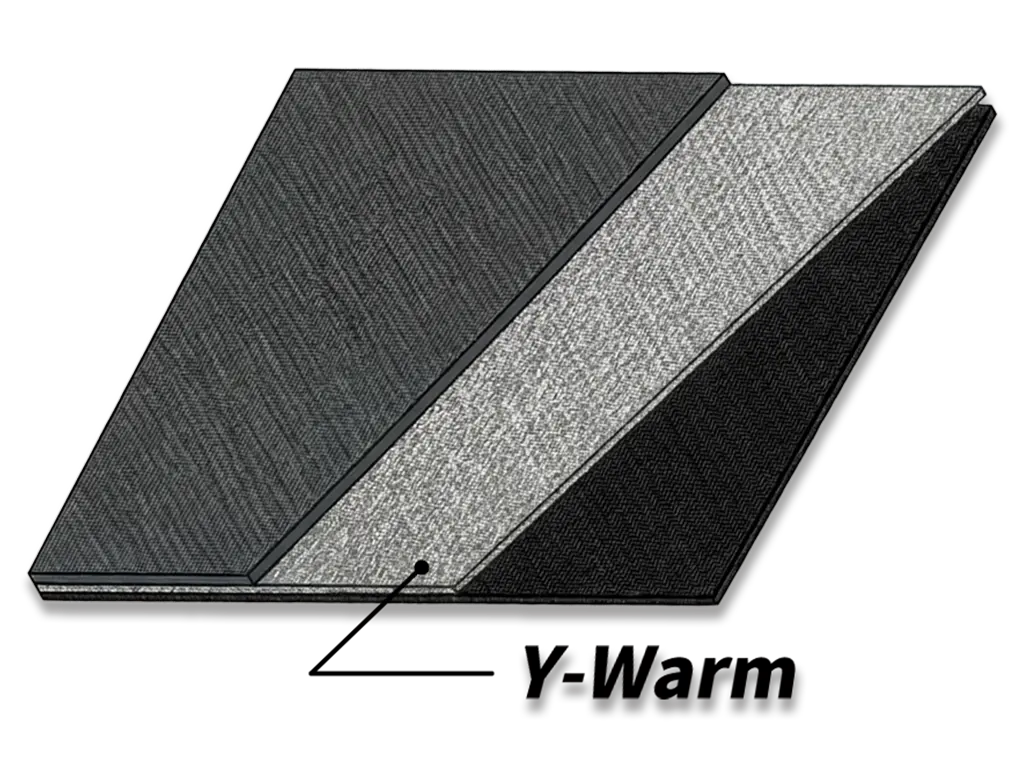
Adopting this framework clarifies how laboratory data becomes actionable in production and field deployment; it points directly to where suppliers like Y-Warm add value by providing documented, traceable material systems — a practical solution for manufacturers who need dependable insulated tent material for demanding environments. —