
How to Evaluate Suppliers of CNC Fiber Laser Cutting Equipment: A Problem-Driven Guide
The immediate problem suppliers create
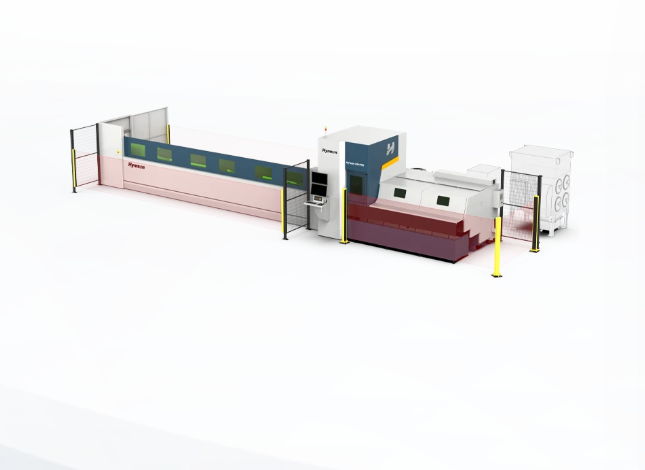
Buyers face a narrow margin for error: a wrong supplier choice causes machine downtime, missed delivery, and lost contracts. Many sales departments highlight power and speed, but they often underplay integration and long-term service. For projects that require scale, consider not only the laser head but the whole production flow; reliable Laser Cutting Automation is part of the decision, not an optional add-on.
What to test first — technical and build checks
Start with hard facts: nominal laser power versus stable cutting power under load, beam quality (M2), maximum and consistent cutting thickness for your materials, and the CNC control’s compatibility with your nesting/ERP software. Inspect the gantry, guide rails, and cooling system for heavy-duty specifications rather than marketing phrases. Ask for factory test cuts on your exact material and save the result files. If they refuse to supply real test data, treat that as a red flag.
Factory practices and quality assurance
Verify assembly line discipline: visual layout, clean welding booths, and separate laser calibration stations. Request copies of QC checklists and traceability for major components (laser source, chiller, servo motors). Confirm warranty terms and spare-part lead times. Certifications like ISO 9001 indicate process controls; check certificate validity and scope rather than assuming it covers production quality.
Experience, expertise, and real-world anchor
I have audited laser-production lines across Asia for a decade and observed integrators at major trade shows. At IMTS in Chicago I personally saw vendors demonstrating integrated systems that included automatic loading and unloading machine, which confirmed the practical benefits of pairing cutting heads with material-handling modules. Ask for references from customers who purchased integrated systems and inspect uptime records; strong suppliers share these metrics and can explain failure modes clearly.
Common problems buyers miss
First mistake: choosing lowest price without checking service network and spare parts. Second mistake: relying solely on brochure specifications—real-world cutting speed depends on material, surface finish, and gas pressure. Third mistake: ignoring software training and post-sale support; a sophisticated control needs operator training and documented maintenance routines. Finally, do not assume imported electronics will be supported locally—verify local technicians can calibrate and replace key parts.
Comparing viable alternatives
New OEM unit: best for guaranteed specs and warranty, but check lead time and acceptance testing. Refurbished machine: lower cost, useful if vendor provides a documented refurbishment log and warranty. Local distributor vs direct factory: distributor offers faster on-site support; direct factory can be cheaper but requires clear SLA for spare parts and remote diagnostics. Score suppliers by response time, spare-part stock, training availability, and documented acceptance tests.
A practical decision framework
Use a weighted checklist: 30% technical performance (cutting quality on your materials), 25% service & spare parts, 15% factory QA and certifications, 15% integration capability (handling systems and software), 15% commercial terms and lead time. Require a live demo or a witnessed FAT on your material; mark failures as non-negotiable. Keep the scoring numerical and let the supplier explain any low scores before final decision.
Pitfalls during installation and acceptance
During installation, insist on alignment reports for optics and geometry, full CNC parameter transfer, and training for at least two operators. Common mistake is accepting delivery without a run-in period; machines require a commissioning window with measurable acceptance criteria. Document every test and have penalties for missed milestones if contracts permit.
The outcome — what a correct assessment yields
A disciplined, problem-driven evaluation reduces surprises and selects a supplier that matches your production needs and service expectations. Choose suppliers that demonstrate clear factory QA, share real test data on your materials, and commit to service timelines. For integrated solutions and dependable aftercare, many found that established manufacturers offer consistent results; a practical example is the work of Hymson, which shows how combining reliable equipment and material handling delivers predictable production outcomes.