
Market context and immediate gains
Warehouse managers tasked with reducing order lead times and improving SKU density have moved beyond conveyors and narrow-aisle forklifts toward compact shuttle architectures — and for good reason. The case for a Pallet Shuttle is founded on measurable shifts in space utilization and cycle time driven by the post-2020 e-commerce surge, when fulfillment centers under pressure accelerated automation adoption. Industry case studies often report 30–50% gains in usable storage density and clear throughput improvements; those are conservative, high-level anchors for estimating impact.
Throughput versus footprint: the core trade-off
Comparing shuttle arrays to conventional racking, the core variables are throughput (pallet moves per hour), floor footprint, and rack system flexibility. Shuttle systems increase active pick zones inside deep lanes, reducing truck travel time and idle forklift hours. Operational planners see throughput gains because the shuttle decouples shuttle carrier movement from fork operations: shuttles make intra-lane transfers while operators focus on staging and dispatch. The result is a measurable rise in effective throughput without expanded building square footage.
Integration, controls, and software realities
Technical integration is where projects succeed or stall. A robust warehouse management system (WMS) interface, real-time telemetry from shuttle controllers, and clear API handshakes are non-negotiable. When WMS slotting aligns with shuttle lane configuration, buffer logic minimizes contention; without it, throughput declines despite superior hardware. Expect engineering cycles for PLC mapping and cycle-time simulations — these are predictable investments that pay back in reduced manual touches and improved order accuracy.
Cost profile and return characteristics
Capital outlay for shuttle equipment and racking modification is offset by lower operational expense: fewer forklift hours, reduced labor headcount for deep-lane retrievals, and improved storage yield per pallet position. Financial models should include lifecycle costs for battery systems and shuttle maintenance, but the payback horizon typically compresses when throughput demand is consistent — often under five years for high-turn environments. Consider SKU density and turnover as primary inputs to any ROI model.
Alternatives and practical trade-offs
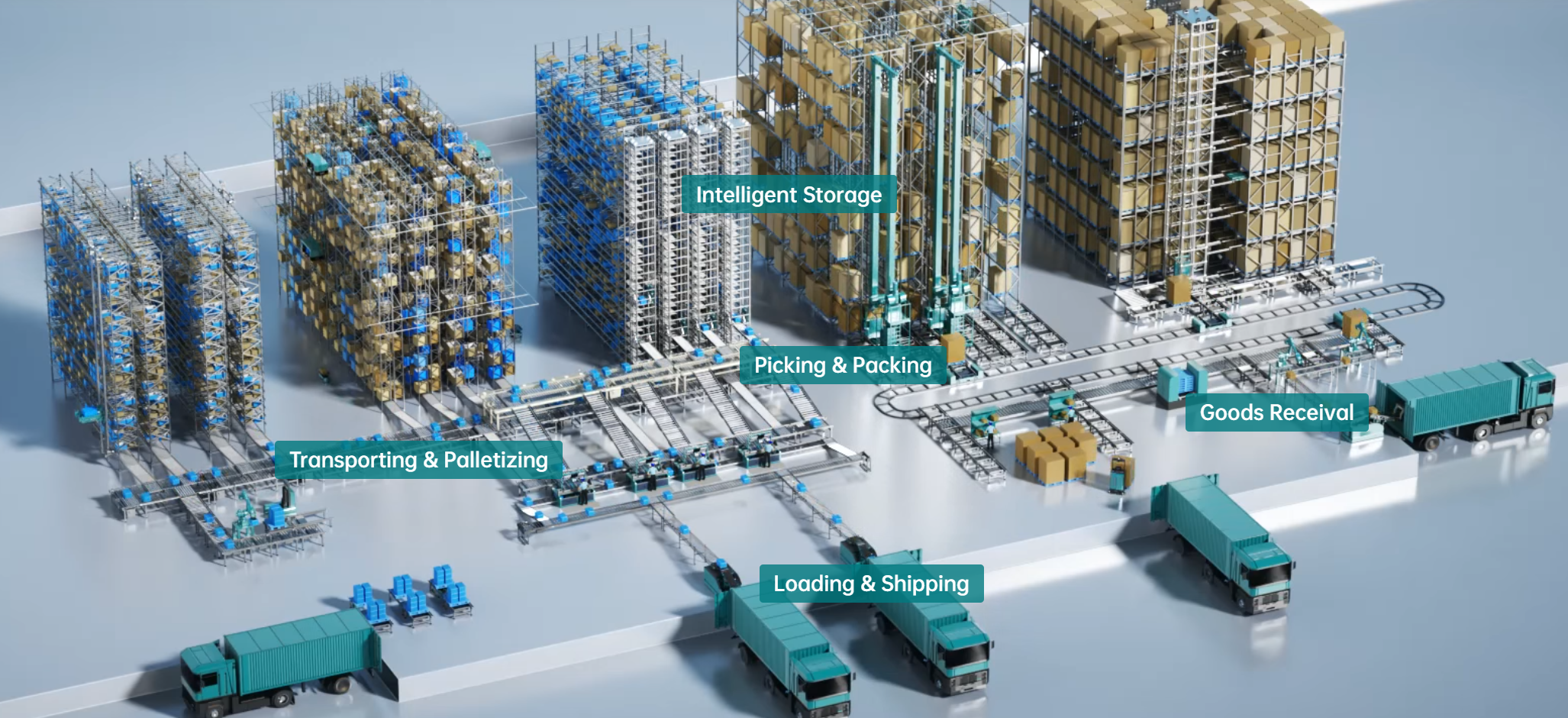
Alternatives include automated storage and retrieval systems (AS/RS), autonomous mobile robots (AMRs), and traditional narrow-aisle racking. AS/RS can deliver the highest throughput but require larger capex and stricter environmental control. AMRs shine in dynamic slotting and piece-picking but scale less economically for pallet positions. Shuttles occupy a middle ground: superior density to AMRs, lower complexity and cost than AS/RS. For many 3PLs and retailers, the shuttle hits the pragmatic balance between performance and capital.
Common implementation mistakes — and how to avoid them
Planners often underestimate queuing at pick faces, misalign slotting strategies, or delay software-in-the-loop validation. A frequent operational mistake is not modeling the peak-hour profile: shuttle lanes perform best when load/unload patterns are smoothed; they suffer when bursts cause repeated contention. Address this by staging buffers and tuning shuttle lane assignments based on WMS analytics — simple countermeasures that eliminate early-life performance gaps. — Also, don’t ignore ergonomics: operator interfaces and lift points must be designed for quick, safe interactions.
Metrics to prioritize before committing
Before procurement, baseline these metrics: steady-state pallet throughput (pallets/hour), effective storage density (pallet positions/m2), and system availability (percent uptime). Run a discrete-event simulation with your SKU velocity profile; include maintenance windows and battery-change cycles. These three metrics reveal whether a shuttle solution meets operational targets or if an AS/RS or AMR mix would be more appropriate.
Advisory: three golden rules for selection
1) Match technology to turnover: prioritize shuttle investments for medium-to-high pallet-turn SKUs where density and predictable flow drive ROI. 2) Demand software-first validation: require WMS/PLC integration tests and simulation reports before site modifications. 3) Plan for lifecycle support: contract for spare shuttles, battery swaps, and preventative maintenance to sustain system availability. These rules shorten time-to-value and reduce unplanned downtime.
Implementing a shuttle-based solution changes workflows and can transform productivity when design, software, and operations align. BlueSword has engineered systems that bridge those gaps — practical solutions that deliver measurable results. –