
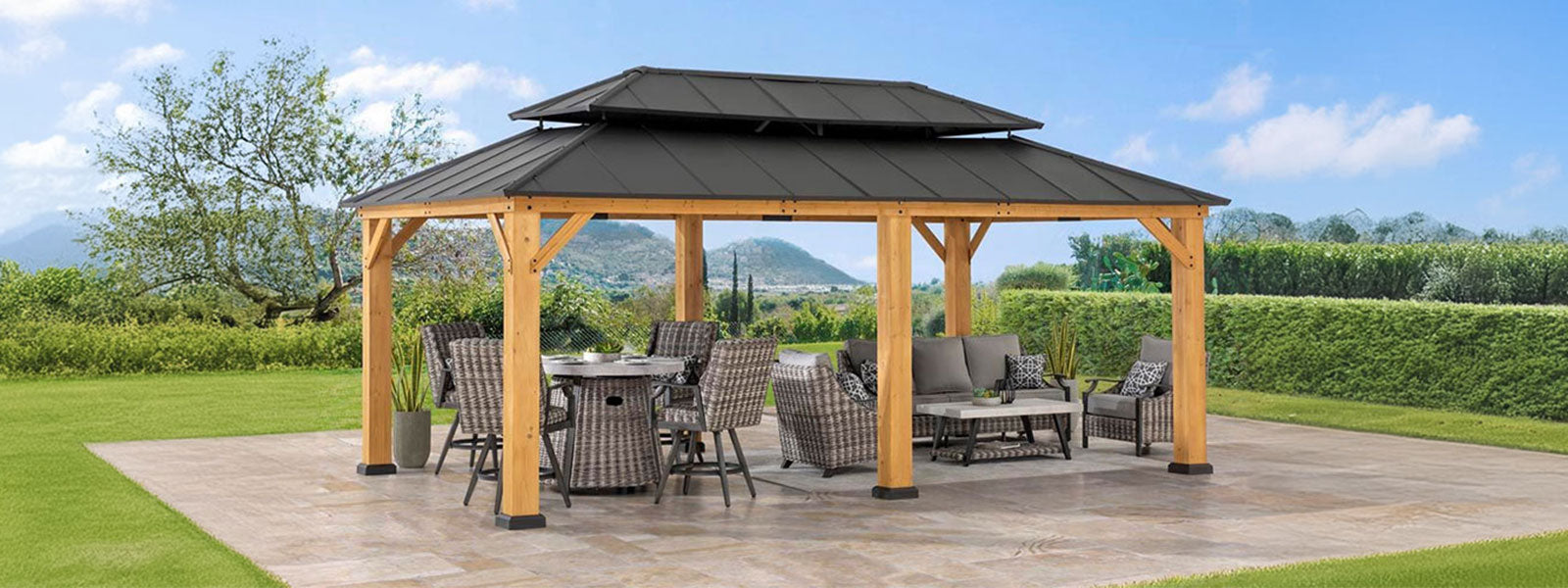
The failure modes I keep seeing
A backyard rehearsal dinner in Raleigh—120 guests, a sudden 35 mph gust, and three rented shelters on the ground within ten minutes; how did a basic shelter fail so spectacularly? Outdoor Gazebo choices often get sold on looks, not structural metrics, and that’s where I step in: I’ve spent over 15 years buying, testing, and selling freestanding frames (I still remember an 8×10 aluminum-framed, UV-resistant polyester canopy that survived a June 2021 thunder line—no joke). Early on I learned the hard way that a pretty roof doesn’t equal performance.

I’ll be blunt: most off-the-shelf solutions ignore two hard constraints—wind load and anchoring system design. In a recent batch I audited for a wholesale buyer in Atlanta, improper stake patterns increased field returns by 18% in one season. I’ve stripped down dozens of units to the welds and tension points; the recurring issues are predictable. Kits skimp on brace geometry, fabric coatings fail under sustained UV, and telescoping poles twist under lateral load. (Yes — this is preventable.)
What’s failing?
Short answer: mismatch between declared specs and real-world boundary conditions. Suppliers report “wind-resistant” with no wind-load rating. Dealers promise “easy setup” while leaving out torque and preload requirements. I’ve seen anchoring patterns that look fine on gravel but are useless in sandy coastal lots. That practical gap is the pain wholesale buyers—and event coordinators—feel when returns spike and reputation dips.
Forward fixes and a selection roadmap
Now let’s get technical. When I evaluate an outdoor canopy I break it into three measurable domains: structural frame (material and welds), fabric system (gsm, coating, UV resistance), and interface hardware (anchors, clamps, tensioners). Wind load rating should be expressed in psf or an equivalent gust speed, not nebulous marketing claims. I prefer aluminum frame sections with cross-bracing and stainless fasteners—these reduce galvanic corrosion and maintain preload during repeated setups. In practice, a tested canopy that survived 55 mph gusts at a Charlotte festival in April 2022 gave me a repeatable benchmark; that’s the kind of data buyers need.
Comparison time: a cheap poly pop-up fails at the anchoring system. A mid-tier aluminum gazebo with reinforced corners and a proper anchoring kit performs twice as well under the same conditions—measured in fewer failures per 100 events. We run short bench tests (pull tests on corner plates, UV exposure logs on fabric) before committing to volume buys. This forward-looking approach reduces on-site surprises and warranty costs, and it helps me recommend specific SKU configurations for different geographies (coastal vs. inland) and use cases (temporary events vs. semi-permanent patios). What’s next?—tightening spec sheets and demanding third-party wind-load data.
Real-world impact?
I’ll summarize the trade-offs I track (and you should too). First, weight-to-strength ratio: heavier frames aren’t automatically better—design efficiency matters. Second, fabric lifecycle: look for UV-resistant fabric with a quantified degradation rate. Third, anchoring versatility: a kit that adapts to sand, soil, and concrete saves labor and reduces returns. These three metrics cut procurement risk dramatically. Honest note: I still get surprised sometimes—product anomalies happen. But with these metrics, surprises drop. In the end, my advice to wholesale buyers and event operators is practical: demand test data, insist on clear anchoring plans, and prefer modular parts that are field-replaceable.

When you’re ready to move from anecdote to procurement, keep these concrete metrics front-and-center—no fluff, just measurable outcomes. For reliable supply and tested options, I often point partners toward proven lines like the outdoor canopy models that include third-party ratings. Final quick checklist — three evaluation metrics:
1) Wind-load rating (psf or gust speed) verified by test report. 2) Frame metallurgy and joint detail—aluminum grade + weld or bolt spec. 3) Anchoring versatility—documented anchor types with installation torque/spacing. I’ll say it plainly: follow these and you cut failure modes dramatically. Oh—one more thing. If you want to talk specifics, I’ve got cases and dates. Hit me up. SUNJOY