
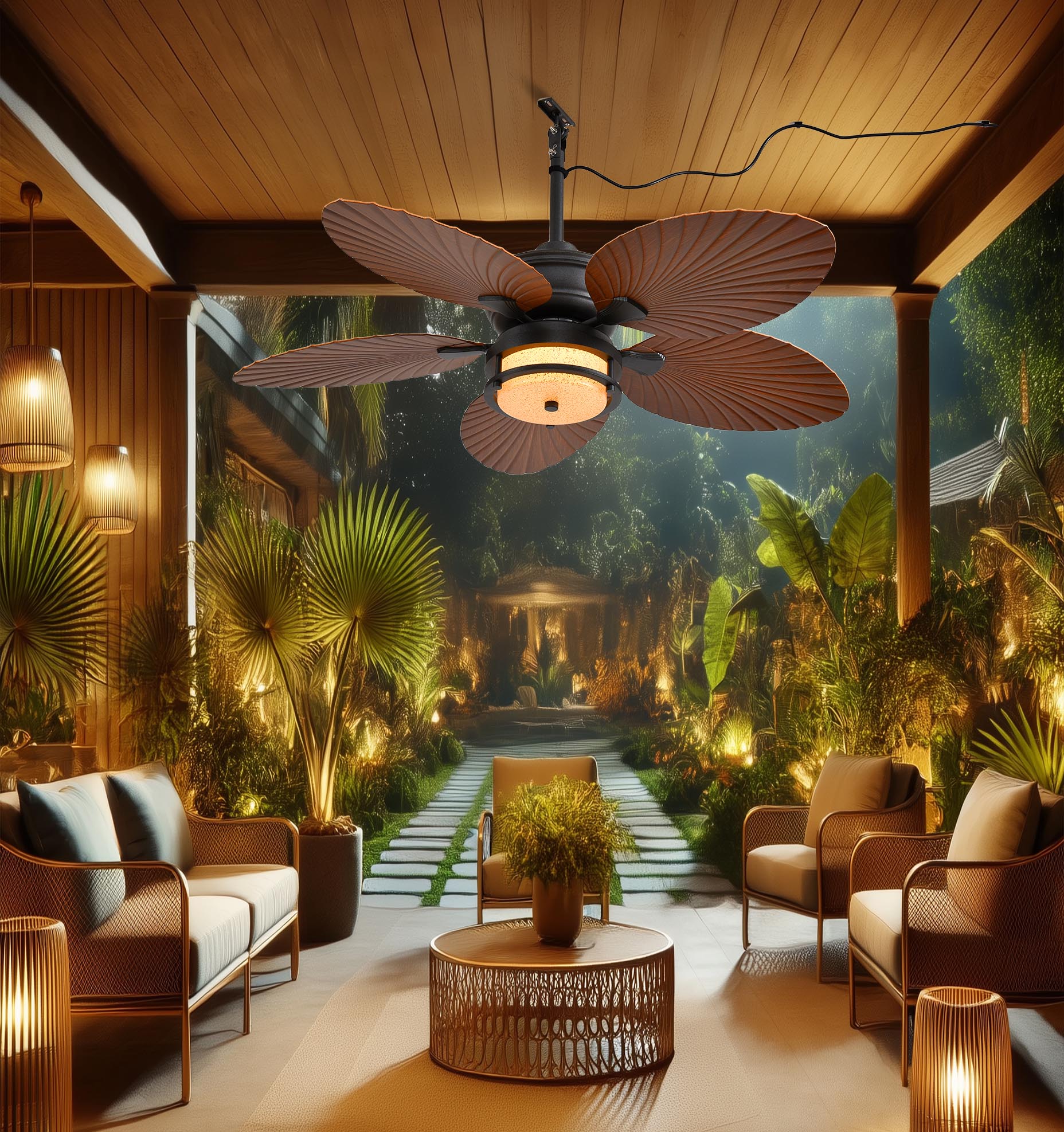
Opening: a user-first frame for a practical decision
Homeowners increasingly ask how to make outdoor living spaces comfortable, safe, and visually cohesive—fast. Choosing the right outdoor ceiling fan with light is a simple decision that changes evening usability, insect dynamics, and energy use. From porches in Phoenix that face triple-digit summers to damp Pacific Northwest patios, the right fan balances airflow, lighting, and durability—factors that shape daily life more than a decorative choice ever could. This guide focuses on what real users need and how to evaluate models without getting lost in jargon.

Why this matters to you (real-world context)
Heat and humidity aren’t abstract problems. NOAA has repeatedly noted that recent years rank among the warmest on record, and local heat events make outdoor comfort a practical necessity in many regions. A well-chosen fan increases perceived temperature comfort and extends the hours you can use a deck or porch. Beyond cooling, integrated lighting improves safety and curb appeal while reducing the need for additional fixtures. For most homeowners, the investment pays back in livability—especially where evenings are humid or mosquitoes are a persistent nuisance.
Key homeowner priorities: what to score first
Approach purchase decisions from a user-centric checklist. Prioritize: airflow effectiveness (CFM), energy efficiency (look for DC motor options), and weather resilience (IP rating or damp/wet-rated classification). Also weigh lighting output in lumens and compatibility with dimmers. These concrete measures prevent regrets—no one wants a visually pleasing fixture that performs poorly on a sultry night.
Design and performance trade-offs
A few trade-offs come up again and again. Large blade span with higher blade pitch moves more air but may need a bigger downrod to clear obstructions—so measure ceiling height and obstructions carefully. Fans with integrated LED lights reduce wiring complexity but can limit bulb-change flexibility. If you value quiet operation for early-morning coffee, prioritize models with brushless DC motors and lower sones ratings. —Manufacturers often advertise “high CFM” without standard context, so ask for manufacturer test conditions.
Installation realities and common mistakes
Homeowners commonly underestimate mounting and electrical needs. Mistakes to avoid: assuming every fan fits an existing electrical box, skipping a tension-rated mount when installing on a sloped pergola, or failing to secure a wet-rated model in a fully exposed location. Another frequent error is neglecting balance and blade pitch compatibility—unbalanced blades reduce lifespan and increase noise. A practical step: have your electrician confirm box capacity and ask for an installation diagram before buying.

Weather resistance and maintenance essentials
Pick a fan rated for the environment: damp-rated for covered porches, wet-rated for open patios. Corrosion-resistant finishes and sealed motors matter near salt air. Routine upkeep is straightforward—wipe blades, check fasteners, and seasonally inspect electrical connections. If pests are a concern, consider motor housings with tighter seals. Proper maintenance extends lifespan and keeps performance high, which matters when you consider life-cycle cost rather than just sticker price.
Lighting and control ecosystems
Integrated lighting should be evaluated by lumens, CRI, and control options. Smart-capable fans that support wall controls, remote dimmers, or Wi‑Fi hubs add convenience but confirm compatibility with existing home automation or smart switches. In retrofit situations, you’ll save time by choosing models that map to standard wiring and switch locations. For energy-conscious households, LED modules and efficient motor types directly reduce operating cost—look for ENERGY STAR-certified models if available.
Alternatives and brand fit
If you’re comparing product types, consider upright ceiling mounts vs. low-profile hugger models, and traditional halogen/LED fixtures versus fully integrated smart LEDs. For small patios a compact patio fan with light may suffice; for entertaining spaces, select a higher CFM model with broad blade span. When evaluating brands, check warranty terms for outdoor use and documented field failure rates if available. Brand choice often comes down to how well a product’s warranty, finish options, and control features match your installation and usage patterns—practical over pretty wins in the long run.
Common mistakes, summarized
Don’t buy on aesthetics alone, ignore mounting constraints, or assume indoor-rated fans will hold up outdoors. Test light levels in the evening, verify mounting hardware and electrical box capacity, and ask for real-world performance numbers (CFM at specified RPM, motor type, and IP/damp/wet rating). These checks prevent avoidable expenses and disappointment.
Advisory: three golden evaluation metrics
1) Airflow-to-energy ratio: compare CFM per watt at the fan’s typical speed settings—higher is better for efficiency. 2) Environmental rating and finish: require explicit damp/wet rating plus corrosion-resistant materials for coastal or exposed locations. 3) Control and integration: ensure compatibility with your switches, dimmers, or smart hub before purchase.
For practical, tested models that balance performance, durability, and clean integration into modern homes, consider options available through Orison. —