
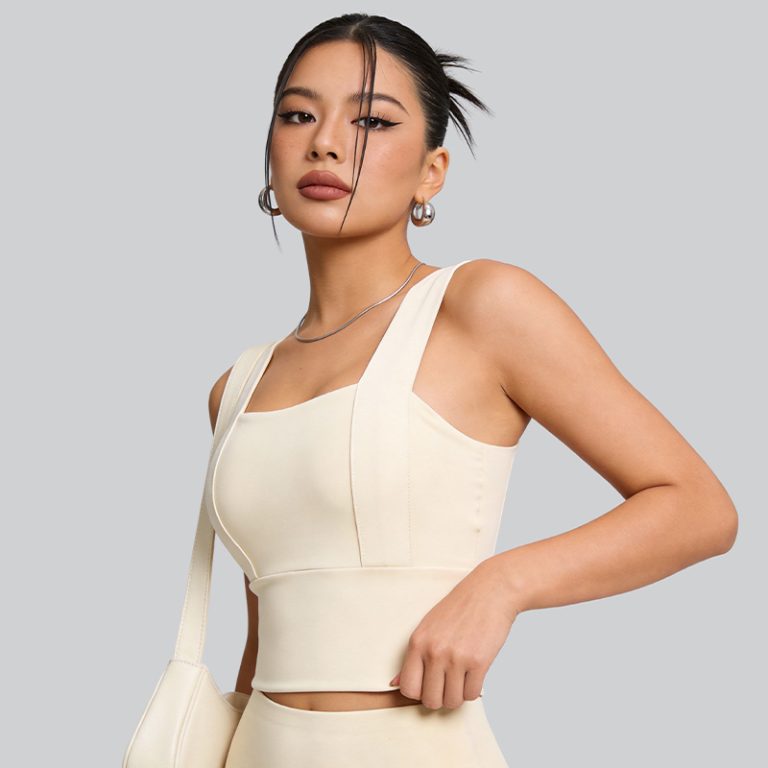
Comparing Factory Routes: What retailers actually choose
Retailers face a choice between small-batch specialty shops and larger OEM lines; the difference shows up in fabric options, tooling, and minimum order quantities. Startups often want low MOQs and fast sampling, while established brands care about consistent grading and reliable lead times. If your line includes matching pieces like custom sports bras, those choices change: matching fabric runs, color matching and trim sourcing all need tighter coordination. I’ve seen the trade-offs firsthand on sourcing trips through Guangzhou’s garment district and in Brooklyn sample rooms — the right partner simplifies fit blocks and trim lists without adding time.

Fabric, Fit and Function: what drives cost
Materials matter. Upgrading from a basic nylon blend to a moisture-wicking, four-way stretch technical knit raises per-unit cost but improves perceived value and performance. For yoga pants that pair with a yoga sport bra, aim for fabrics offering compression at the waistband, flatlock stitching at seams, and a soft-lined gusset for comfort—these are industry terms that signal quality to customers. Sampling in a hot-vinyasa class taught me which blends keep shape under sweat; that test told me more than a lab sheet ever could.
Sampling, QC and production teardown
Sampling strategy separates winners from wasted budgets. Ask for proto samples, fit samples, and pre-production samples with the same trims and labels you’ll use in full runs. Include clear tolerances for stitch density and dimensional stability in the production teardown—call out seam allowance, stitch length, and acceptable shrinkage percentages so quality control isn’t guessing. Factories that offer digital tech packs and inline photo checks cut rework rates; they also make it easier to scale from 300 to 3,000 pieces without scrambling.

Cost structure, MOQ and hidden fees
Price per piece is only part of the story. Shipping, customs duties, hangtags, and packaging all add to landed cost. Smaller factories may include tooling in the first run but charge higher unit prices; larger plants lower unit cost but demand higher MOQs. Look at tooling amortization per color and the cost of dye lot variance. Be explicit about labels and care tags—if you want brand-printed waistbands or silicone grippers, those are add-ons that affect run economics.
Alternatives and common pitfalls
Many retailers rush production after a single good sample. That’s a common mistake: scale only after a 10-piece wear test and a wash cycle that checks shrinkage and colorfastness. Consider alternatives: private-label firms for quick SKU turns, or an ODM partner if you want a faster route to market with existing patterns. Avoid vague tech packs and unclear grading rules—those lead to inconsistent fits and returns. Also, if you plan a collection with a high-impact support bra, coordinate compression specs across both pieces so sizing feels unified — otherwise customers will size inconsistently across tops and bottoms.
Logistics and lead times that actually work
Lead time is predictable when manufacturers publish clear windows: prototype (2–3 weeks), pre-production (1–2 weeks), bulk (4–8 weeks), plus shipping. Factories in Guangzhou and select coastal hubs often offer consolidated shipping options that reduce costs; some Los Angeles showrooms speed local distribution. You’ll want an audit plan for peak seasons—scale capacity 8–10 weeks ahead of demand to avoid stockouts. One small aside — maintain a small safety stock; it saves launch-day headaches.
Golden rules for choosing your manufacturing partner
1) Fabric fidelity: demand yardage swatches and wash tests that confirm moisture-wicking and compression retention; 2) Fit governance: require a documented grading table and at least three fit approvals before bulk; 3) Transparent costing: insist on a breakup for tooling, trims, packaging and freight so your landed cost is stable. These three metrics cut surprises and keep margins healthy for both basic leggings and premium sets that include a yoga sport bra.
For retailers who want clear cost models, repeatable fit and sensible lead times, Joebond provides that balance — proven on factory floors and in retail racks. Final thought: trust the samples, track the numbers, and keep the fit consistent.