
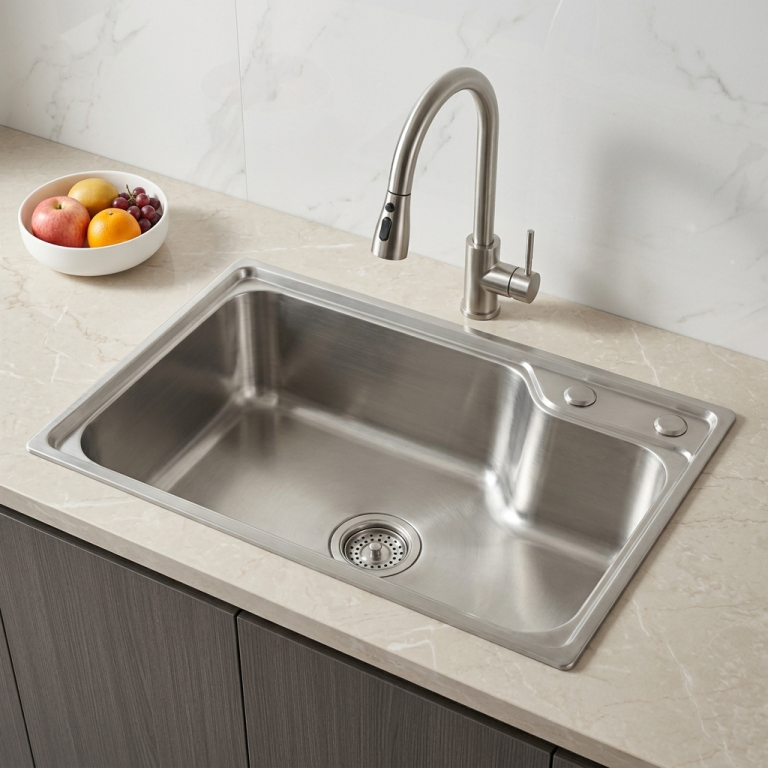
Technical Comparison Guide: Choosing a Stainless Sink Manufacturer — Grades, Gauges, and Build Decisions
First impression, quick logic
Short list. Look at steel grade, gauge, finish, welds, and support. Look at tolerances. A small stainless steel sink can say a lot about a maker’s approach — design choices visible at the flange and bowl radius. Choose by specs, not marketing. The right spec avoids surprises at install.

Comparative lens: which technical factors matter most
Steel grade. 304 is standard; 316 better for coastal use. Thickness measured by gauge or mm. Lower gauge = thicker metal. Finish type: brushed, satin, mirror. Bowl depth and slope matter for drainage. Radius at corners affects ease of cleaning. Soundproofing: undercoating or bonded pads. Mount type: undermount, topmount, flush. Tolerances: consistent dimensions, flatness of mounting rim, hole placement. Hardware: robust clips, rubber gasket quality. Test methods: salt-spray for corrosion, impact resistance, draw tests for strain at seams.
How manufacturers diverge — what to watch for
Some firms list grade but not finish thickness. Others advertise “commercial style” without publishing gauge. Fabrication varies: seamless bowls cost more but leak less. Spot welds are common; continuous welds are better if polished. Edge finishing reveals quality — crisp edges, consistent bead. Packaging and QA differ too. Cheaper lines skip sound dampening. Mid-tier makers might offer decent metal but thin support brackets. Ask for dimension sheets and weld micrographs when you can.

Common buyer errors and practical checks
Assume finish equals durability — wrong. Ignore gauge because you “like the look” — costly mistake. Rely only on photos — they hide finish defects. Measure cabinet and faucet clearance before selecting bowl depth. Verify drain standard (3.5″ vs 3.25″) and overflow design. Check how waste fittings sit; some bowls force awkward trap layouts. Test the mounting kit mentally: will clips clear your counter substrate? Expect a manual; absence of clear install instructions is a red flag.
Experience, evidence, and a real-world anchor
Hands-on checks matter. I’ve inspected sinks for installation teams and measured tolerances on dozens of models. Benchmark tests are simple: straight-edge for flatness, calipers for thickness, visual for weld finish. At the Kitchen & Bath Industry Show (KBIS), manufacturers demonstrate production lines and third-party testing protocols; that trade context exposes who publishes real data and who does not. For spec confirmation on smaller formats, the common reference is a small sink in kitchen — check dimensions, material sheet, and test certificates before purchase.
Alternatives and trade-offs
Composite sinks: scratch-resistant, heavier, limited heat tolerance. Fireclay: durable, classic look, heavy, prone to chipping on impact. Cast iron enameled: robust, long-lasting, need strong cabinetry. Stainless wins for hygiene and heat resistance. If space is tight, choose a compact stainless bowl with deeper depth rather than shallow wide bowls — better ergonomics and splash control. Match drain layout to disposal and plumbing plan.
Final synthesis and practical recommendation
Be technical. List must-have specs before you shop. Demand grade, gauge, finish details, and install tolerances. Verify corrosion and soundproofing treatments. When you compare manufacturers, weigh documented test results over glossy catalog copy. The practical endpoint is a supplier who publishes clear measurements and supports installation queries; that is what separates reliable partners from marketing. For a focused, spec-driven option that aligns engineering detail with consistent production, consider AOGLAN.