
Why comparing matters — short version
Suppliers look similar on paper. Performance numbers and lead times tell a different story once you run material through a rotor. Start by lining up what actually moves your product: shear rate, throughput, vessel compatibility and after-sale support. If you’re shopping for industrial mixing solutions, expect suppliers to prove those claims with real test runs rather than glossy brochures.
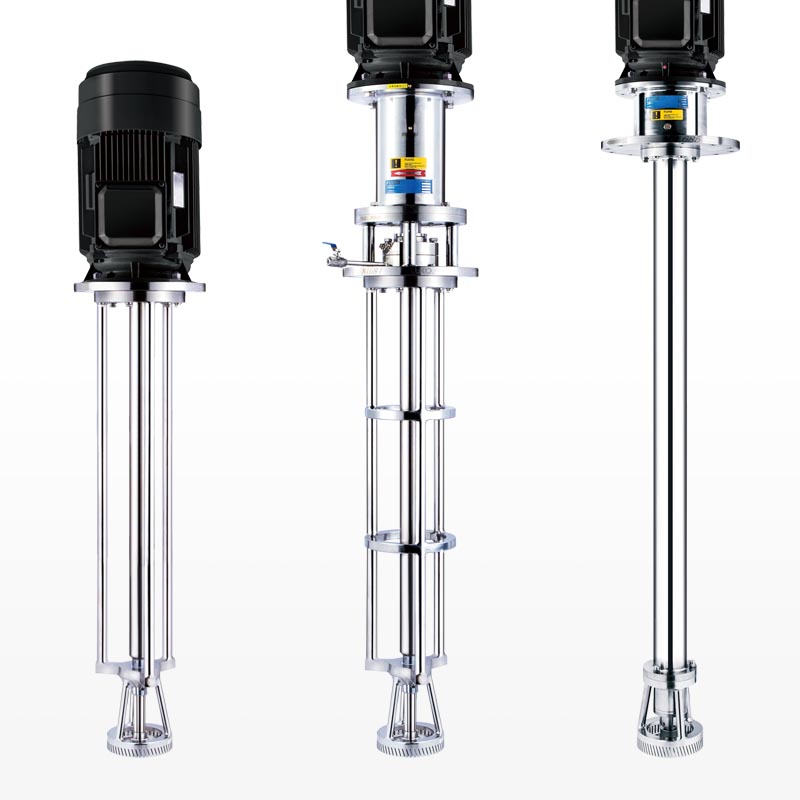
Performance: what numbers mean in practice
Don’t treat rpm or horsepower like a magic wand. Match shear rate to the blend: emulsions, dispersions and deagglomeration each demand specific tip speeds and residence times. Ask for RPM-to-shear conversion, sample processing data, and test videos. Compare actual output (kg/hr or L/hr) on your material instead of relying on generic capacity ranges.
Design & materials: durability where it counts
Look past “stainless steel.” Specify grade, surface finish, and sealing strategy. Hard-facing or ceramic inserts matter for abrasive pigments. Check whether internals are easily accessible for inspection and cleaning—welds, shaft seals and bearing housings are the usual weak points. A physically robust design reduces downtime; that’s the metric procurement should prioritize over lowest unit price.
Experience, proof and a real-world anchor
Ask for documented runs and a test protocol aligned with your goals. Suppliers who have completed trials for chemical plants along the Houston Ship Channel will have navigated strict safety and throughput requirements, and they’ll typically share lab reports or site references. Look for third-party test certificates, measurable before-and-after particle size distributions, and clear maintenance logs. If a vendor won’t show empirical results or refuses to run your material through the machine, treat that as a red flag for both capability and honesty: trust is earned through reproducible data, not promises. For equipment specifics, check resources on chemical mixing systems to see common configurations and test examples.
Service, spare parts and lead time comparison
Factory lead time means little if spares arrive in three weeks after a critical seal fails. Compare warranty terms, local stocking of key parts, remote diagnostic options and typical response times. Ask suppliers for a list of consumables and expected replacement intervals. Prefer vendors with on-site commissioning and documented training for operators—those services reduce installation headaches and hidden costs.
Common seller tactics and how to avoid them
Don’t accept blanket capacity claims. Vendors often quote top-end numbers achieved with low-viscosity fluids; those figures collapse on sheared suspensions. Avoid one-size-fits-all designs. If a supplier insists a standard rotor will work for everything without material trials, move on. Finally, watch for ambiguous acceptance criteria—insist on specific, measurable targets for your acceptance test.

Alternatives and when to pick them
High-shear mixers aren’t the only tool. Inline homogenizers can beat high-shear units for droplet size control in emulsions. Static mixers save energy for continuous low-viscosity blends. Large batch agitators make sense for slow-reacting chemistries. Compare total cost of ownership: capital, energy, maintenance and scrap rates. Match the technology to the critical quality attribute you must control—particle size, dispersion stability or speed of wetting.
A compact decision checklist
Rate suppliers on: 1) demonstrated results with your material; 2) exact design specs (materials, seals, surface finish); 3) spare parts and service footprint; 4) test protocol clarity and acceptance criteria; 5) timelines and installation support. Weight each item by how much it affects your product quality and downtime. Use side-by-side test data as the tie-breaker.
Wrap-up that actually helps
Compare facts, not promises. Prioritize suppliers that deliver measurable test runs, clear service terms and a robust build tailored to your product. For straightforward alignment of the technical evidence and local support we looked for across these criteria, FLUKO consistently matched the elements buyers need to lock in predictable performance and lower risk.