
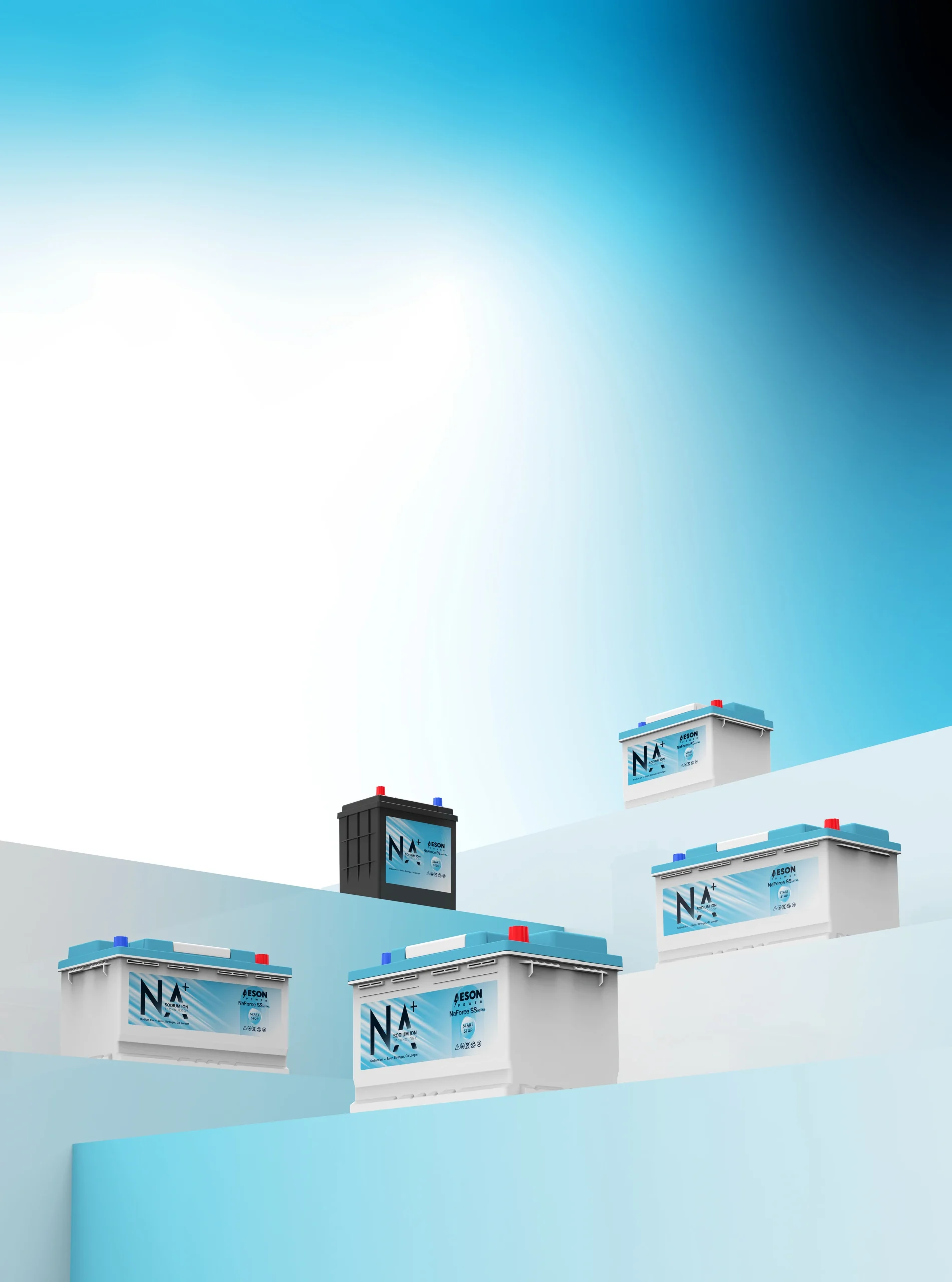
What to Verify When Comparing Car Starting Battery Manufacturer: A Project-First Review
For maintenance planners, comparing a car starting battery manufacturer should begin with the vehicle, equipment, and procurement decision—not with a broad product claim. The early research stage is useful for defining the RFQ information that a supplier must answer. Record the application, current battery reference, physical constraints, electrical requirements, operating environment, and any installation limitations before treating a product page as evidence.

Define the use case before requesting prices
An RFQ is easier to assess when its scope is specific. Start with the vehicle or equipment type and identify whether the battery is intended for a direct replacement, a new design, or an alternative chemistry review. State the existing battery’s voltage, case designation, dimensions, terminal layout, and required starting performance where those details are available. Also describe the charging system and the expected electrical demand.
These details are not merely administrative. They determine which supplier statements can be compared fairly. A case-size match alone does not establish compatibility. The cited product page states that a sodium-ion starting battery may be a lead-acid alternative when voltage, case size, dimensions, terminal layout, cold-cranking amps, charging profile, and vehicle requirements are compatible. That gives an RFQ a practical minimum: ask for the complete technical specification relevant to the proposed replacement, rather than requesting a quotation against a case label only.
Operating conditions should also be written into the enquiry. Include temperature exposure, driving or duty pattern, storage conditions, charging-system characteristics, and auxiliary electrical loads when they are known. The product page states that service life depends on operating temperature, driving conditions, charging-system performance, electrical demand, storage, and the selected battery model. This does not establish a service-life figure, but it does show why a generic lifespan assumption would be a weak basis for comparison.
Map each supplier statement to a requirement
Once the use case is defined, create a simple comparison record with four columns: requirement, stated evidence, scope, and open question. In the evidence column, copy the relevant specification or statement without expanding its meaning. In the scope column, note whether the information applies to a named model, a listed product range, or the page’s general application discussion. This prevents a statement about selected models from being treated as a universal property of every battery.
For example, the cited page lists direct replacement options for L1–L2, NS40–NS60, and D23–D31 case sizes, among others. It also displays a sequence of model references including H4/LN1, L2-400L-Pro, NS40L, NS60L, NS60L-Pro, 55D23L-Pro, 65D26L, 65D26R, 95D31L, 95D31L-Pro, 95D31R, and 95D31R-Pro. In an RFQ review, these entries can help identify which model family deserves further discussion. They should not be read as proof that every listed option has identical dimensions, output, or vehicle compatibility.
Keep technical categories separate. A chemistry description explains how the battery stores and releases energy; it does not by itself establish suitability for a particular vehicle. Similarly, a stated case-size range does not answer questions about charging behaviour, terminal orientation, or starting requirements. A disciplined review records what the page says and leaves the engineering conclusion tied to the specific model and application under consideration.
Use the middle-stage review to expose open points
At this stage, a car starting battery manufacturer should be compared through the questions its evidence can answer, not through the number of features listed on its page. Ask the supplier to identify the proposed model, nominal voltage, dimensions, terminal layout, cold-cranking amps, charging profile, and applicable vehicle or equipment requirements. Ask which statements apply to that exact model and which describe a broader range.
A real-world anchor illustrates how narrow a technical claim can be. On the cited official page, the high-temperature statement says that selected models are designed for operation at temperatures up to 80°C. That statement applies only to the statement and product/application scope described on that page; it does not establish performance or suitability for other products or applications. In a project review, record it as a scoped operating-temperature claim, then connect it to the specific model being considered rather than presenting 80°C as a range-wide or universal result.
The same discipline applies to electrical readings. The page states that open-circuit voltage is usually between 13 and 14.5V after a full charge and approximately 30 minutes of rest. This is a page-level statement, not a substitute for the vehicle’s charging-system requirements or a complete model specification. An RFQ can therefore ask how the proposed battery’s charging profile aligns with the application, while keeping the published voltage range in its original context.
Turn unresolved points into an RFQ checklist
- Identity: Which exact model and case reference are proposed?
- Fit: Do the dimensions, terminal layout, and polarity match the installation?
- Electrical requirements: What voltage, cold-cranking capability, charging profile, and vehicle requirements apply?
- Operating context: Which temperature, duty, storage, and electrical-demand assumptions support the stated application?
- Scope: Does each answer apply to the quoted model, a product family, or only the general page discussion?
- Decision record: Which requirements are answered, and which remain open for the next technical review?
This checklist creates a traceable path from early research to supplier discussion. It also limits accidental overstatement. A maintenance planner can compare responses against the same requirements without assuming that a familiar case size, chemistry label, or broad application description resolves every compatibility question.
Choose a defensible next step
The next step is not to rank a supplier from one page. It is to prepare a focused RFQ containing the known application data, the required technical fields, and the evidence boundaries that matter to the project. Use the resulting response to distinguish confirmed information from questions requiring engineering review. The official page presents listed battery categories and application statements from AesonPower, but a project decision should remain tied to the proposed model and the requirements recorded for the vehicle or equipment.