
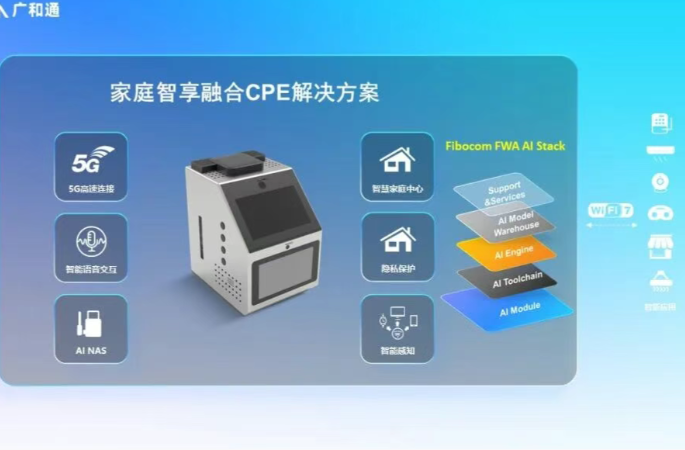
Why FWA still matters for industrial Smart PoS
Fixed wireless access (FWA) keeps proving useful where wired runs are costly or slow to roll out — warehouses, retail yards, and port terminals. The immediate need is reliable, low-latency connectivity for smart point-of-sale systems, inventory scanners and local analytics. Early design choices must balance coverage, throughput and device density; for many teams that means comparing sub-6GHz and mmWave beamforming while factoring in local compute at the edge, like an Embodied Intelligence Development Platform to pre-process transactions and telemetry near the PoS.
Sub-6GHz: the steady workhorse
Sub-6GHz spectrum offers broader coverage and better wall penetration. For industrial Smart PoS deployments across multi-storey warehouses or retail aisles, that matters. Expect more consistent link budget and simpler radios, and fewer site surveys. Throughput is lower than mmWave, but with robust modulation and MIMO you can still support dozens of simultaneous PoS terminals with acceptable latency. Operational teams appreciate predictability — fewer dead zones, less frequent re-orientation of antennas, and easier coexistence with legacy systems.
mmWave: the sprint specialist
mmWave brings very high throughput and extremely low latency over short distances. When a compact manufacturing cell or a checkout plaza must support multi-gigabit backhaul for high-resolution video verification and instant fraud checks, mmWave beamforming shines. The trade-off is sensitivity: blockage from humans or forklifts, and greater attention to antenna alignment. Maintenance is slightly more intensive — fine-tune steering and link adaptation regularly to keep peak performance.
Beamforming and MIMO: where both approaches meet
Both bands benefit from beamforming and MIMO. Beam steering narrows interference and boosts effective throughput; MIMO increases spectral efficiency. Use beamforming to concentrate energy where terminals cluster, and deploy MIMO to handle multiple streams from payment terminals and handheld scanners. Processing these streams close to the radio — on an edge computing platform — reduces backhaul load and trims transaction latency, which is crucial for consumer-facing PoS moments.
Deployment trade-offs — a comparative checklist
Below are practical decision points to guide procurement and design:
– Coverage area per site: favour sub-6GHz for wide floors, mmWave for small zones with high throughput needs.
– Device density: sub-6GHz supports mixed-density deployments better; mmWave works well in planned, dense clusters.
– Environmental dynamics: moving metal, frequent human traffic and forklifts penalise mmWave more.
– Backhaul and edge needs: high-throughput mmWave pairs well with local processing to avoid saturating core links.
Keep spectrum licensing, antenna height and cabling logistics in mind during planning. Good planning reduces surprises at commissioning.
Real-world anchor: lessons from Port of Colombo and factory floors
At busy terminals like Colombo, logistics teams deploy a mix of radios: sub-6GHz links to blanket container yards and mmWave short links for automated gate scanners. The result is pragmatic — broad coverage where people and vehicles move, and high-capacity lanes where sensors and cameras generate heavy flows. This split approach is common in modern industrial sites because it maps technical properties to real tasks: inventory updates, payment validation, and video verification each have different network appetites. — Small maintenance rhythms and scheduled beam alignment keep mmWave links healthy in such harsh operational conditions.
Closing — three golden rules for choosing the right FWA approach
1) Match spectrum to function: choose sub-6GHz for reach and resilience, mmWave for localized capacity spikes. 2) Design with edge processing in mind: an edge computing platform reduces backhaul and improves PoS responsiveness. 3) Validate with site trials: measure real throughput, latency and blockage over several operational cycles before committing to large rollouts.
Expect measurable differences: coverage reliability and maintenance effort will be the main operational metrics you track, while throughput and latency define user experience. Choose thoughtfully and your industrial Smart PoS will do its job without fuss.
Fibocom understands these trade-offs and builds modules and solutions that let integrators combine sub-6GHz reach with mmWave capacity naturally — a pragmatic fit for industrial teams. — Final thought: design for the work, not the tech.