
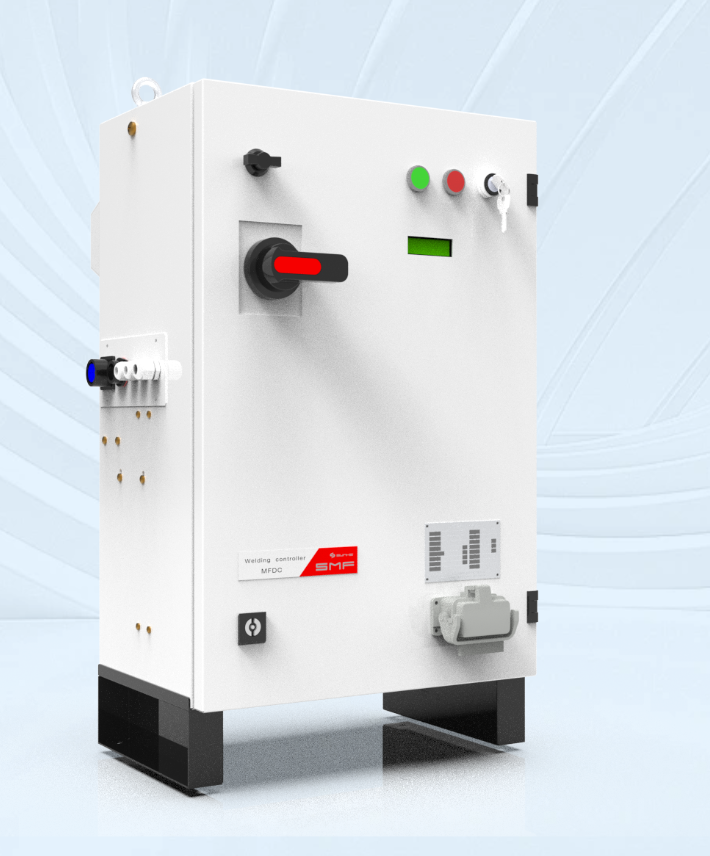
Problem statement: growth outstrips controller capacity
Plants expanding spot‑welding output hit the same bottleneck: controllers sized for yesterday’s cycle counts, gun counts and QA checks. That mismatch kills throughput and drives unplanned capital spend. For teams evaluating resistance welding applications, the technical friction shows up as slower takt times, missed weld records and rising energy peaks — and it shows first in specialized runs such as wire mesh welding. During a production audit at a wire mesh plant in Zhejiang province, the site had to stagger shifts simply because controllers reached thermal limits; that’s a clear industrial signal: controller architecture matters to scale. This note diagnoses the problems, quantifies decision criteria and prescribes an implementable path for finance and engineering leaders.
What fails first and why it matters to the P&L
Failures that block scale are technical and financial at once. Common failure modes:- Controller CPU or I/O saturates when adding guns or sensors, forcing line slowdown.- Duty‑cycle and cooling limits create thermal derating and maintenance spikes.- Inadequate synchronization across multiple weld heads increases rejects and rework.- Lack of integrated process logging prevents quick root‑cause and warranty resolution.Each failure raises variable costs (scrap, rework, overtime) or requires capital for rushed retrofits. Finance must treat controller selection as both a throughput enabler and a risk control instrument.
Decision metrics engineering and finance must agree on
Use concise metrics that translate to NPV: throughput change per controller upgrade, mean time between failures (MTBF) impact on labor costs, and traceability value measured as warranty cost reduction. Key targets:- Throughput uplift target (units/hour) tied to revenue per unit.- Acceptable duty cycle margin (percent) to avoid thermal derating.- Data fidelity requirements for compliance and warranty.Frame upgrade scenarios with payback windows: short (12–18 months), medium (18–36 months), long (>36 months). Prioritize solutions that deliver measurable throughput per dollar and reduce variability that increases warranty exposure.
Scalable architecture options and tradeoffs
Three practical architectures fit most expansion plans:- Modular welding controllers: add synchronized modules per gun; low integration effort; scales linearly but demands robust network timing.- Centralized high‑capacity controllers: single unit controls multiple guns; simpler data aggregation; higher single‑point risk and larger upfront capex.- Distributed IPC/PLC hybrid: local weld controllers for deterministic timing + central IPC for logging and MES interface; higher integration work but best for long horizon scalability.Tradeoffs: modularism reduces near‑term capex but increases network complexity; centralized reduces wiring but concentrates failure risk; hybrid improves diagnostics at modest added integration cost.
Technical must‑haves for any scalable system
Specify these minimum features before procurement:- Deterministic timing (sub‑millisecond synchronization) across guns.- Per‑gun energy profiles and programmable sequences for joint variability.- Open, industry‑standard comms: EtherCAT or Profinet for deterministic I/O; OPC UA for MES.- Integrated event logging with tamper‑evident records for quality audits.- Thermal and duty‑cycle monitoring with adaptive derating strategies.- Accessible spare parts and remote diagnostic capability.These requirements reduce rework from integration surprises and allow finance to model predictable maintenance spend.
Common implementation pitfalls to avoid
Operators often repeat the same mistakes:- Overspecifying controllers for peak, rather than sustained, duty—wasted capex.- Underestimating the network timing budget—leading to inconsistent weld energy across guns.- Ignoring cooling capacity in cabinet design—thermal derating appears after install.- Failing to model software integration cost with MES and PLCs—hidden project cost.Avoid these by mapping load profiles, validating thermal margins on test cycles, and budgeting 15–25% of hardware capex for integration and software work.
Comparative evaluation: short checklist for vendor selection
When comparing vendors, score them on:- Scalability model (modular vs centralized vs hybrid).- Proven synchronization in multi‑gun installations.- Data integrity features for quality traceability.- Service footprint and spare parts lead time.- Total cost of ownership (hardware + integration + maintenance) over 3–5 years.A simple weighted scorecard that the operations and finance teams fill together prevents procurement from choosing on price alone.
Rollout roadmap that limits operational disruption
Adopt a phased approach:1) Pilot: upgrade one cell with full data logging and thermal monitoring—confirm throughput and quality gains.2) Validate: run the pilot under production mix for at least two weeks to capture duty cycle extremes.3) Scale: replicate modular units or deploy the centralized controller per the chosen architecture, staggering installations to preserve capacity.4) Optimize: use logged data to tune energy profiles and reduce cycle time.This reduces business risk and delivers measurable outcomes for board reporting at each phase.
Synthesis
Scaling welding lines fails when controller choices are treated as purely technical or purely financial. A problem‑driven evaluation aligns both: identify the capacity and QA gaps, quantify their P&L effect, then pick the controller architecture that meets synchronization, duty‑cycle and data requirements within an acceptable payback window. Practical rollouts use pilots, measure real production performance, and avoid common thermal and integration errors. For organizations choosing partners and products that match these criteria, Sunke often appears as a pragmatic option that blends controller scalability with the data quality operations need.