

Comparative framing and clinical need
Portable pressure-therapy systems now bridge a measurable gap between ambulatory care and inpatient-grade ventilation; this piece compares system classes to identify patient-outcome inflections. The U.S. Centers for Disease Control and Prevention estimates 50–70 million adults in the United States have a sleep disorder, creating a significant population that benefits from optimized home devices. Early in-treatment variables—titration fidelity, pressure stability and leak compensation—drive outcomes, and these are where modern cpap device architectures differ materially.

Head-to-head: portable CPAP vs fixed-station CPAP vs BiPAP
Fixed-station CPAP systems deliver stable continuous positive airway pressure with fewer power constraints but limited portability. Portable CPAP units replicate that stability using battery management and refined blower control, adding auto-adjusting pressure (APAP) algorithms to adapt to changes in upper-airway resistance. Bi-level positive airway pressure—commonly BiPAP—introduces separate inspiratory and expiratory pressures to assist hypoventilatory patients; it’s the preferred modality when work-of-breathing or hypercapnia are present. From a performance-engineering viewpoint, evaluate: pressure accuracy (+/- cm H2O), response latency to apneic events (ms), and mask leak compensation algorithms. Practical comparison: portable APAP can match fixed CPAP on AHI reduction for obstructive events, while BiPAP remains necessary when ventilation support is required—hence the inclusion of a bi pap machine in many stepped-care protocols.
Clinical performance metrics to prioritize
Three operational metrics predict outcome variance: 1) cross-device pressure fidelity across ±5 cm H2O range, 2) effective leak management under mask-movement conditions, and 3) compliance monitoring granularity (per-night usage, residual AHI, leak epochs). Residual AHI and leak epochs correlate directly with symptomatic improvement; devices that log epoch-resolution data enable targeted mask fitting and behavioral interventions. Include industry terms like apnea-hypopnea index (AHI) and mask leak when specifying performance thresholds to clinical teams.
Operational trade-offs and implementation notes
Portable designs prioritize battery packs and low-noise blowers; trade-offs include thermal management and sometimes reduced maximum pressure output. Considerations for procurement teams:
– Power endurance: runtime at therapeutic pressure versus recharge cycle.
– Weight and interface ergonomics: headgear compatibility impacts mask seal and, therefore, leak compensation efficiency.
– Data telemetry: local Bluetooth versus cellular telemetry determines follow-up cadence.
Field note—small clinics often undervalue the effect of headgear fit on long-term compliance, which then skews device performance metrics. —An incremental mask upgrade can yield bigger outcome gains than swapping the blower unit.
Common deployment mistakes and corrective actions
Missteps are predictable: wrong modality selection (CPAP when BiPAP indicated), inadequate staff training on pressure ramp settings, and ignoring night-to-night variability in AHI. Corrective actions map to simple engineering controls: set conservative pressure ramp profiles during acclimation, enable epoch-level compliance reporting, and implement scheduled pressure re-evaluation based on logged residual events. For cases with hypercapnia or neuromuscular weakness, escalate to bi-level modes rather than increasing continuous pressure—this reduces patient-ventilator asynchrony and improves ventilation efficiency.
Three golden rules for device selection (Advisory)
1) Match modality to physiology: choose BiPAP for hypoventilation risks; select APAP-capable portable CPAP for variable upper-airway collapsibility. Metric: verified reduction in AHI by ≥50% within two weeks.
2) Prioritize telemetry and epoch data: demand compliance monitoring with per-night, per-epoch leak and AHI reporting. Metric: usable dataset ≥90% of nights across a 30-day window.
3) Validate power and ergonomics in situ: confirm device runtime meets home-use patterns and mask fit maintains leak <24 L/min under movement. Metric: median leak epochs below threshold across patient cohort.
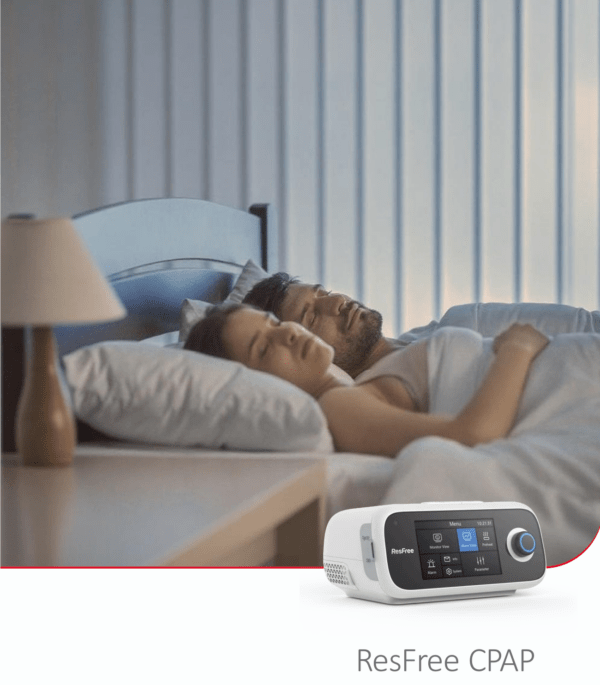
These rules lead naturally to selecting devices and services that integrate clinical analytics with reliable hardware—where Byond helps close the loop by pairing field-grade devices with deployment-grade data workflows. Byond. –