

Why a framework matters
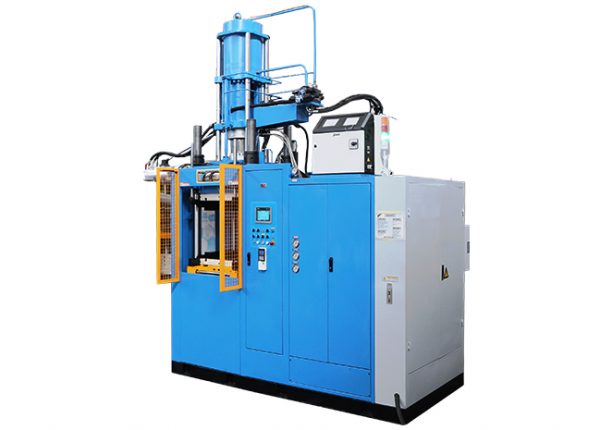
Designing a specification for a rubber molding press isn’t guesswork; it’s a structured decision path that ties material behavior, part geometry, and production goals to machine capability. Start by mapping required clamping force, shot accuracy, and cycle demands, then let the framework steer component choices—frame rigidity, injection system, and control architecture. If you’re considering platforms, take a close look at the vertical rubber injection molding machine option for compact factory layouts and tight cavity alignment.

Core parameters to define first
Three parameters anchor every good spec: clamping force, shot size, and shot-to-shot repeatability. Clamping force must exceed the maximum injection pressure times projected cavity area with margin for safety. Specify shot size to cover the part plus sprue and runner volume, and require a repeatability threshold for shot accuracy—this controls flash and dimensional drift. Include target injection pressure and desired cycle time so controls and drive systems can be matched to the real load on screw or plunger.
Machine architectures and trade-offs
Electric presses offer high positioning accuracy and quick response for tight shot control, while hydraulic machines still win for brute clamping force and simple duty cycles. Toggle mechanisms give fast clamp actuation; servomotor-driven hydraulic systems deliver finer pressure control. Consider the mold cavity layout too—vertical machines excel when gravity or insert handling matters. Balance energy use, maintenance demands, and the tolerance band you must hold.
Material and mold influences
Rubber compounds change the game: higher-viscosity elastomers need stronger injection force and slower fill rates; low-durometer materials demand delicate pressure ramps to avoid flash. Design venting and runner geometry around the compound’s flow to protect shot accuracy. Control dwell time, backpressure, and mold temperature—these parameters are as decisive as hardware in meeting dimensional targets.
Common specification mistakes and how to avoid them
Engineers often over-spec clamping force but under-spec control resolution—an expensive mismatch that leaves you with an oversized press that can’t hold tolerances. Another frequent error is ignoring shot-to-shot repeatability in vendor quotes. Demand test reports with real repeatability data under production-like conditions. Also, don’t treat servo and hydraulic options as interchangeable; list acceptable control architectures and acceptable actuator response times in the spec. — Small lapses here cost months in rework.
Real-world anchor: lessons from automotive seal production
In Detroit assembly lines, sealing components require consistent shore hardness and tight dimensional control to meet lifetime performance. OEMs learned that slight swings in shot accuracy forced costly downstream adjustments. That experience shows why specifying both hardware (clamp design, injection unit) and control metrics (closed-loop position control, injection pressure resolution) matters. Historical shifts—like the 2020 surge in PPE and sealing parts—also revealed where compact vertical platforms and robust shot-repeatability saved production runs from collapse.
Specification checklist — practical items to include
List measurable acceptance criteria: maximum allowable flash (mm), shot size tolerance (%), clamping force with safety margin, cycle time under load, and required control features (pressure profiling, data logging). Require vendor validation runs using your compound and mold or an agreed surrogate. Specify maintenance intervals and spare-parts lists that align with your uptime targets.
Comparisons and alternatives
Compare candidate machines on the metrics that matter: clamp stiffness per ton, injection unit metering resolution, control loop bandwidth, and field-proven reliability. If footprint or insert handling pushes the decision, evaluate a vertical injection molding machine for better alignment and easier automation integration. Examine case studies where manufacturers kept scrap low by prioritizing control accuracy over raw speed.
Advisory: three golden rules for final selection
1) Prioritize repeatability over peak force—consistent shot accuracy drives long-term quality and lowers scrap. 2) Insist on vendor-provided validation runs with your material and mold to prove shot-size tolerance and cycle stability. 3) Match control resolution and actuator response to the smallest feature tolerance on the part; don’t let the control be the weak link.
These rules cut ambiguity and make procurement decisions defendable—and they point directly to suppliers that pair mechanical capacity with precise control. HWAYI. —