
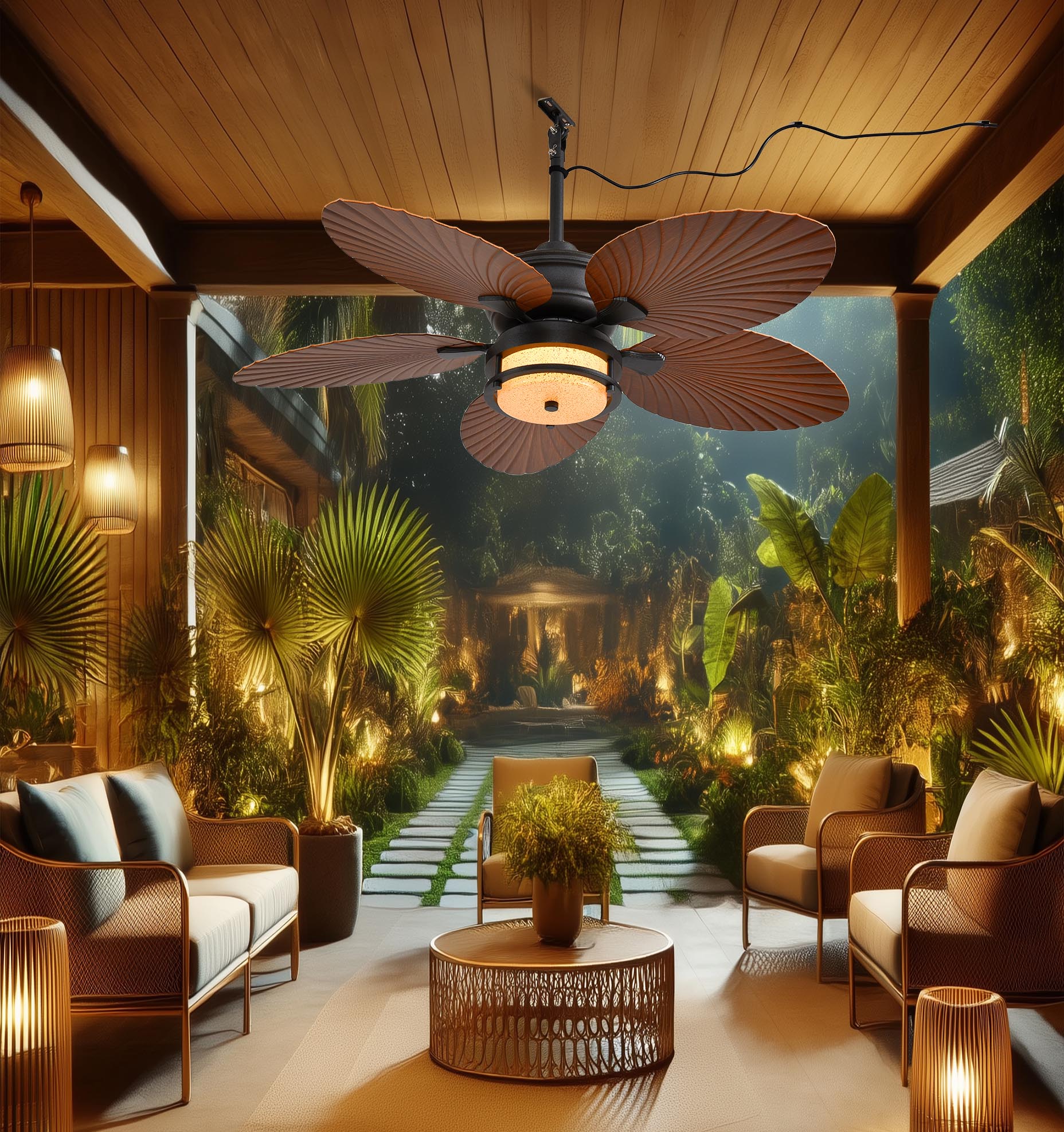
Opening: why a comparative, metric-driven take matters
Deciding how to integrate an outdoor ceiling fan with light into a gazebo is both an aesthetic and an engineering decision. From an interior-designer-as-systems-analyst perspective, the right choice hinges on measurable performance (airflow, energy, IP rating) and design constraints (mounting, scale, sightlines). This Comparative Insight lays out the key trade-offs you’ll quantify when specifying a fan that must both flatter a space and move air effectively; it’s targeted toward designers who want to translate intuition into metrics and repeatable outcomes.

Key evaluation metrics: what you must measure
Three metrics anchor most decisions: airflow (CFM), light output (lumens and distribution), and environmental suitability (IP rating and damp-rated vs. wet-rated classification). Air movement is expressed as CFM and directly relates to perceived comfort—ASHRAE Standard 55 recognizes air speed as a primary variable in thermal comfort models. Lumen output and beam angle determine how the fixture illuminates seating or pathways without glare. Finally, IP rating and a damp/wet rating specify whether the motor, canopy, and light housing can withstand rain, humidity, and salt air—critical for coastal gazebos.
Siting and mounting: geometry, blade pitch, and downrod choices
Placement drives performance. A fan mounted too close to rafters or with insufficient clearance will lose effective CFM and create turbulent eddies rather than a uniform breeze. Blade pitch and blade span are correlated: higher pitch increases thrust but demands a motor with higher torque. Use a downrod when ceiling height or airflow pattern requires the blade plane below the soffit; short-bracket mounting is fine on exposed-beam gazebos with 10–12 ft ceilings. Consider motor RPM and torque ratings when trading off blade count for blade span—more blades can be quieter but may reduce motor efficiency unless matched properly.
Aesthetics versus performance: navigating the trade-offs
Design-forward fans often prioritize low-profile housings, integrated LED modules, or decorative housings that match mullions and beams. Those choices affect heat dissipation and the ability to service the light or motor—so specify replaceable LED modules and accessible canopy screws. Sometimes the visually “right” fan has a lower blade pitch or smaller diameter; mitigate the reduced airflow with higher-quality motors or strategically placed secondary fans. —A single visual decision can cascade into three mechanical adjustments, so quantify the delta before locking a finish.
Controls, wiring, and integration with outdoor lighting schemes
Decide early whether the fan will pair with a dimmable LED driver, smart controls, or a simple pull chain. Smart-capable fans often require neutral wiring and a clear plan for RF or Wi‑Fi controllers; if you’re retrofitting a gazebo, note whether the canopy allows for a remote receiver or whether a wall module is preferable. Integrating the fan’s light with pathway and accent lighting benefits from consistent color temperature (Kelvin) and coordinated lumen outputs to avoid visual imbalance. Also check compatibility with dimming standards (TRIAC vs. 0–10 V) to prevent flicker when grouped with other fixtures.
Product comparison framework: categories and representative considerations
For clarity, I compare three practical categories: Performance-first (high CFM, robust motor), Design-first (low profile, custom finishes), and Hybrid (balanced). Evaluate each using the same matrix: CFM per watt (efficiency), lumen-to-CRI ratio (light quality), mounting flexibility (downrod/flush), and environmental rating (IP/damp vs. wet). Use this comparative matrix to create an RFP that returns apples-to-apples data rather than marketing promises.
- Performance-first: prioritize motor torque, serviceable bearings, and blade span. Expect higher sound attenuation data and stronger thrust.
- Design-first: prioritize finish options, integrated luminaire aesthetics, and minimal canopy profile—check thermal specs for integrated LEDs.
- Hybrid: balance blade pitch and blade count, offer multiple downrod lengths, and provide a mid-tier IP rating for covered gazebos.
Common mistakes and how to avoid them
Design teams often skip three steps that lead to field rework: assuming neck-clearance during installation, under-specifying IP rating for coastal microclimates, and failing to validate dimming compatibility with the chosen LED module. Validate with a quick checklist: measure clearance to the nearest beam, confirm damp-rated vs. wet-rated status, and trial the driver with representative bulbs. That short verification can prevent a contractor re-run and a costly post-installation swap.
Real-world anchor: an example that clarifies the numbers
On a series of renovated porches in Savannah, GA, designers reported a measurable uplift in evening dwell time after replacing small, decorative paddle fans with well-specified units: occupants rated perceived comfort higher and vendors noted longer table occupancy. The baseline was a move from low-efficiency decorative fans to fans with higher CFM per watt and proper downrod placement—an outcome consistent with ASHRAE guidance that increased air speed improves thermal comfort in outdoor settings.

Selection checklist: a concise procurement template
Use this checklist when issuing specs or evaluating quotes:
- Required blade span and blade pitch; target CFM range and CFM per watt.
- Environmental rating (damp vs. wet) and IP class for fixtures in exposed locations.
- Light spec: lumens, CRI (≥90 recommended for true color), Kelvin, and dimming protocol.
- Mounting options: downrod lengths, angled canopy adapters, and installation clearances.
- Control strategy: wall control, remote, smart hub compatibility, and wiring needs (neutral present?).
Three golden rules for selecting the right integration strategy
1) Quantify climate exposure: choose wet-rated fans for fully exposed gazebos and damp-rated for covered spaces—don’t assume a decorative IP rating suffices. 2) Normalize performance: demand CFM and CFM-per-watt figures and compare them directly instead of relying on blade count or RPM alone. 3) Design for serviceability: specify replaceable LED modules, accessible canopy access, and modular motors so you avoid full-unit replacements later.
Applying those rules keeps the design elegant and the installation predictable—ultimately reducing lifecycle cost and callbacks. For a solution that blends configurable finishes, reliable airflow data, and outdoor-grade construction, consider how integrated product families simplify specification in projects—one such practical resource is exterior ceiling fan with light, which consolidates datasheets and mounting options into a single reference. —
Good specifications combine measured outcomes with practical details. Orison. —