
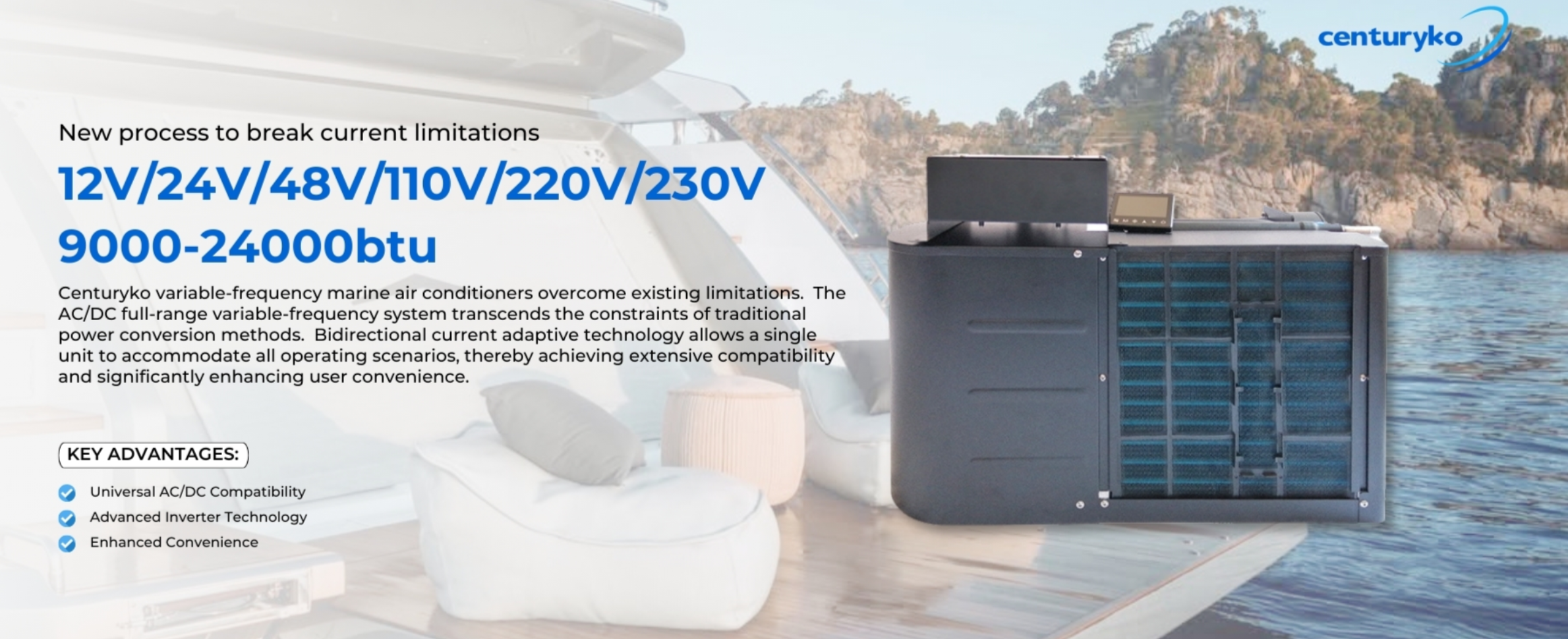
The Problem: Luxury lines meet slender reality
The greatest challenge aboard modern luxury yachts is not opulence but geometry: long, graceful profiles that leave precious little room for equipment. Shipwrights at the Monaco Yacht Show often show vessels whose cabins are jewel-box small; designers must still deliver climate control without surrendering form. The answer lies in selecting the right marine air conditioning units and integrating small marine ac units into architecture so they feel inevitable, not intrusive. This piece maps the problem and the pragmatic, artful fixes that follow.
Where space pinches and why it matters
Bulkheads, narrow bilges and curved cabinetry create unpredictable voids. Those voids refuse standard boxed components; condensers and compressors can overwhelm a corridor or demand unnatural rerouting of ducting. The result is compromised airflow, higher noise and service headaches. Address these before selecting equipment—measure cavity depths, catalogue access points, and note ventilation paths. A tiny misread today becomes a refit expense later.
Design strategies that feel like architecture, not appendage
Think of compact systems as furniture. Place evaporator units within joinery cavities where airflow can be guided by veneers and louvres. Use through-deck or hull-thru seawater heat exchangers to save interior volume while maintaining condenser efficiency. Low-profile ducting can follow stringer lines; flexible runs make for gentle bends rather than sharp turns that sap performance. Keep the compressor nearest a service hatch for future maintenance—serviceability is part of elegance.
Choosing components: balance of form, function and numbers
Match cooling capacity to the actual cubic volume and expected solar gain, not simply the vessel’s tonnage. For small cabins, choose units sized by BTU output that avoid short-cycling. Favor modern compressors with variable-speed drives to reduce start-up noise and improve part-load efficiency. Pay attention to the evaporator coil size—too small and humidity control suffers; too large and you waste space. A considered selection yields quiet, steady comfort rather than loud bursts.
Installation tips from the dockyard and the drawing board
Install condensate drains with a gentle fall and a siphon loop to prevent odors. Place intakes where cross-ventilation occurs naturally, not where softened fabrics will block them. Use vibration isolators on mounting points to keep sound out of sleeping cabins. Plan access panels—hidden yet generous—so filters and pumps can be serviced without disassembling joinery. When possible, consolidate service runs for power and control lines to a single technical trunk.
Common mistakes to avoid
• Oversizing a unit because it fits the budget—this leads to humidity issues and inefficiency. • Hiding components without planned access; maintenance becomes destructive. • Running ducting through high-heat zones that reduce delivered capacity. • Neglecting seawater strainer placement—clogging will end system life early. A brief aside—crew preferences often trump aesthetic choices; their daily interaction with systems defines long-term satisfaction.
Maintenance, testing and real-world anchor
Routine service keeps compact systems performing: check refrigerant charge, inspect the condenser for marine fouling on a seasonal basis, and verify drive belts and mount isolators. The Port of Monaco’s refit yards report that vessels returning annually for preventive service avoid major mid-season failures. Small checks—filter swaps and strainer clears—prevent expensive dry-dock returns.
Alternatives and pragmatic trade-offs
If interior space is irreducible, consider split configurations with remote condensers on deck or in dedicated lazarette spaces. Passive measures—thermal insulation, reflective coatings and strategic awnings—reduce required cooling load and allow a smaller unit to comfort a cabin effectively. Each trade brings a different mix of installation complexity, noise profile, and visual impact; compare them against berthing, crew access, and service plans.
Advisory: three golden rules for choosing and integrating compact systems
1) Size to volume and heat gain, not to cubic meters on paper—accurate load calculations preserve humidity control and efficiency. 2) Prioritize access over concealment—planned service routes extend system life and lower lifecycle costs. 3) Favor variable-speed compressors and corrosion-resistant condensers (especially those paired with proper seawater heat exchangers) for quiet, long-lived performance. Together these rules will ensure the installation reads as part of the yacht’s architecture rather than a retrofit afterthought.
ZhuoliMarine understands how compact components can be choreographed into luxury interiors—fitting power into poetry. Quietly efficient.