
Before shortlisting Incubator Heating Element, map application scope for early research
Choosing an incubator heating element for early research starts with the cabinet, not a catalog label. Procurement teams should first define what the equipment must do, where the heater will sit, and which surrounding systems will control the cabinet. The objective is not to name a universally best part. It is to create a requirement that can be compared with stated product evidence.

Define the use case and constraints
Begin by recording the egg species, incubation stage, cabinet design, and required temperature and humidity conditions. The heater works with the fan, sensors, controller, and humidity system to establish cabinet conditions. These details therefore belong in the requirement before a part is shortlisted.
Space is an equally practical constraint. Note the available mounting area, tray layout, return-air paths, sensor positions, and moisture conditions. These points affect how a heater can be integrated. They also help separate a standalone heater for an existing fan system from a fan-assisted module. A procurement brief that omits these details may compare parts that are not intended for the same installation.
Electrical structure must be treated as a design requirement rather than a marketing synonym. Conductive and insulated describe the heater’s electrical structure, not whether it uses contact heating or air heating. Conductive versions require suitable housing and insulation protection. This distinction should appear in the initial risk and integration review.
Map stated evidence to requirements
Next, divide the shortlist into confirmed facts, design dependencies, and questions that remain open. A page-listed specification can confirm a model’s stated voltage, wattage, dimensions, or housing requirement. It cannot, by itself, establish that the model suits every cabinet or control system.
| Review area | Page-stated evidence | Procurement question |
|---|---|---|
| Electrical and physical specification | 220V, 100W, and 92 × 31 × 25 mm are stated for the Conductive PTC Air Heater. | Do these values apply to the exact model proposed for the cabinet? |
| Housing and insulation | Suitable electrical insulation and housing are required for the stated conductive model. | What housing and insulation arrangement is required in the planned installation? |
| Airflow integration | Standalone models transfer heat to air, while cabinet airflow and installation determine how heat reaches the eggs. | How will the proposed heater work with the cabinet’s fan, airflow paths, and installation? |
| Control boundary | The PTC element’s resistance rises as it warms, while the cabinet controller determines when heating is required. | Which controller, sensors, and heater arrangement form the complete control system? |
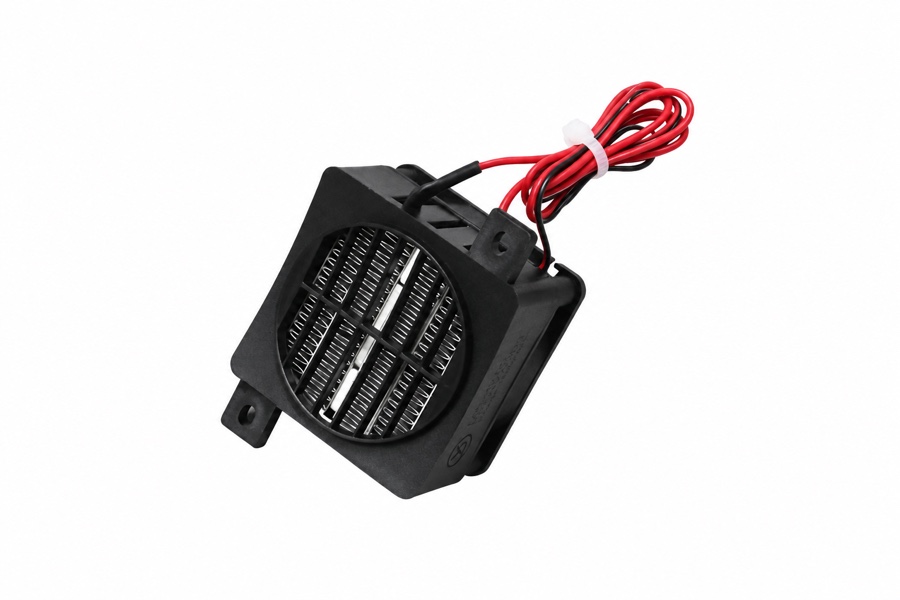
One stated example is a Conductive PTC Air Heater listed at 220V and 100W, with a size of 92 × 31 × 25 mm. The same listing states that suitable electrical insulation and housing are required. Those details are useful for an early fit review, but they should remain tied to that specific model rather than being applied to every heater in the product family.
For a heating element for incubator, the key comparison is the complete operating arrangement. Both featured standalone models transfer heat to air; cabinet airflow and installation determine how that heat reaches the eggs. In other words, “conductive” does not answer the air-delivery question. The fan arrangement, cabinet paths, sensor positions, and mounting protection must be assessed together.
The PTC principle also clarifies the boundary between the heater and the control system. Electrical current heats the ceramic element, and its resistance rises as it warms, helping limit power output. The cabinet controller still determines when heating is required. Procurement should therefore avoid treating the element as a substitute for the controller, sensors, or airflow design.
Turn open points into supplier questions
Once the requirements are mapped, convert every unresolved point into a precise supplier question. Ask whether the proposed model is intended as a standalone heater for an existing fan system or as part of a fan-assisted module. Ask which housing and insulation arrangement is required for the proposed installation. Ask the supplier to relate the stated dimensions and electrical values to the exact model under review.
Questions should also describe the cabinet rather than relying on a broad application name. Include the tray layout, return-air paths, sensor positions, moisture conditions, and the planned controller. This gives the supplier the context needed to discuss heater structure and protection components without turning a general product statement into an unsupported suitability claim.
Keep the review record disciplined. Place page-listed values in one section, installation dependencies in another, and supplier responses in a third. If a response changes the proposed configuration, record the affected requirement. This makes the next review easier and prevents a familiar term such as “PTC” from standing in for a complete system assessment.
Summarize a defensible next step
The next step is a bounded shortlist, not an automatic purchase decision. Select only models whose stated electrical and dimensional details can be compared with the cabinet brief. Then review airflow, mounting, insulation, sensor placement, humidity conditions, and controller interaction as one installation question.
This approach gives early research a clear decision trail. It preserves useful evidence, exposes integration work, and limits conclusions to the product and application scope actually described. PTCYIDU can then remain one named source in the procurement record, while the final choice rests on the documented cabinet requirements and the supplier’s answers to the open technical questions.